
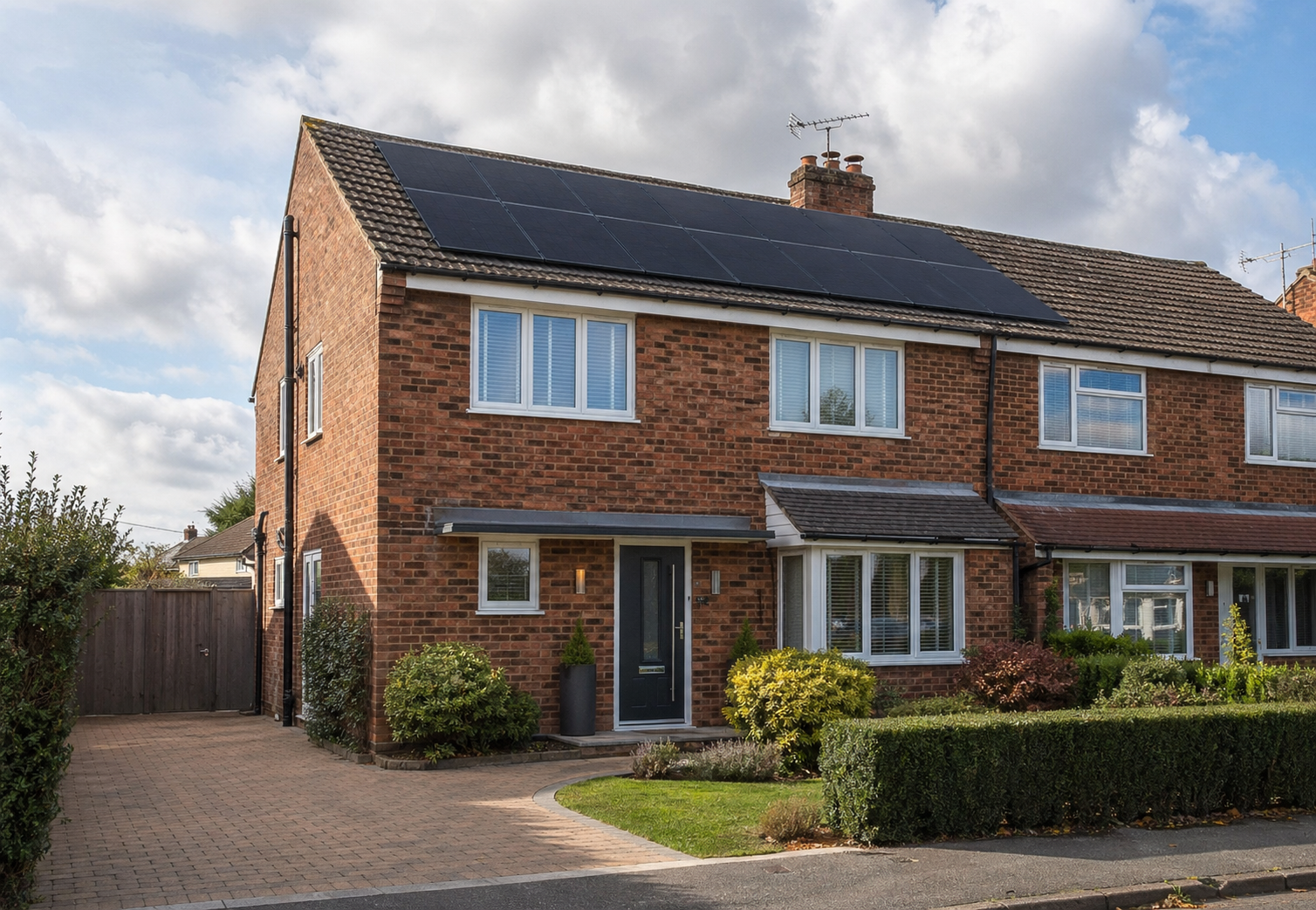
Why 3-Bed Homes Are a Strong Fit for Solar
Three-bedroom houses are one of the most common property types in the UK, and from an installer’s perspective they tick most of the right boxes. The roof area is usually large enough to fit a system that genuinely matters, but small enough to keep installation costs reasonable. Annual electricity use sits in a useful range — high enough to make the panels work hard, low enough that you’re not constantly fighting export limits.
Whether you’re in a Victorian terrace in Manchester, a 1960s semi in Surrey, or a new-build estate house in Bristol, the maths is broadly the same. A south-facing pitched roof with around 25–35m² of usable space will comfortably hold a 4kW system, and that’s the size most UK 3-bed households end up with for good reason.
Here’s what makes the case worth looking at in 2026:
- Electricity unit rates remain elevated — currently 27.69p/kWh under the Q1 2026 price cap, still well above pre-2021 levels even after recent falls.
- 0% VAT on residential installations applies until 31 March 2027. After that, expect 5% to be added back.
- Smart Export Guarantee (SEG) tariffs reach up to 15p/kWh from the better suppliers — so unused electricity isn’t wasted.
- Standing charges hit 54.75p/day — meaning even a low-usage household pays roughly £200/year just to be connected. Solar doesn’t remove that, but it neutralises most of what sits on top.
If your roof faces roughly south and you’re staying 8+ years, the answer is usually yes.
The properties where solar genuinely doesn’t pay back are easier to identify than people think — heavy shading, north-facing slopes, or very low electricity usage. For most other 3-bed homes, the financial case stacks up.
Solar Panels for 3 Bed House UK: Cost Breakdown 2026
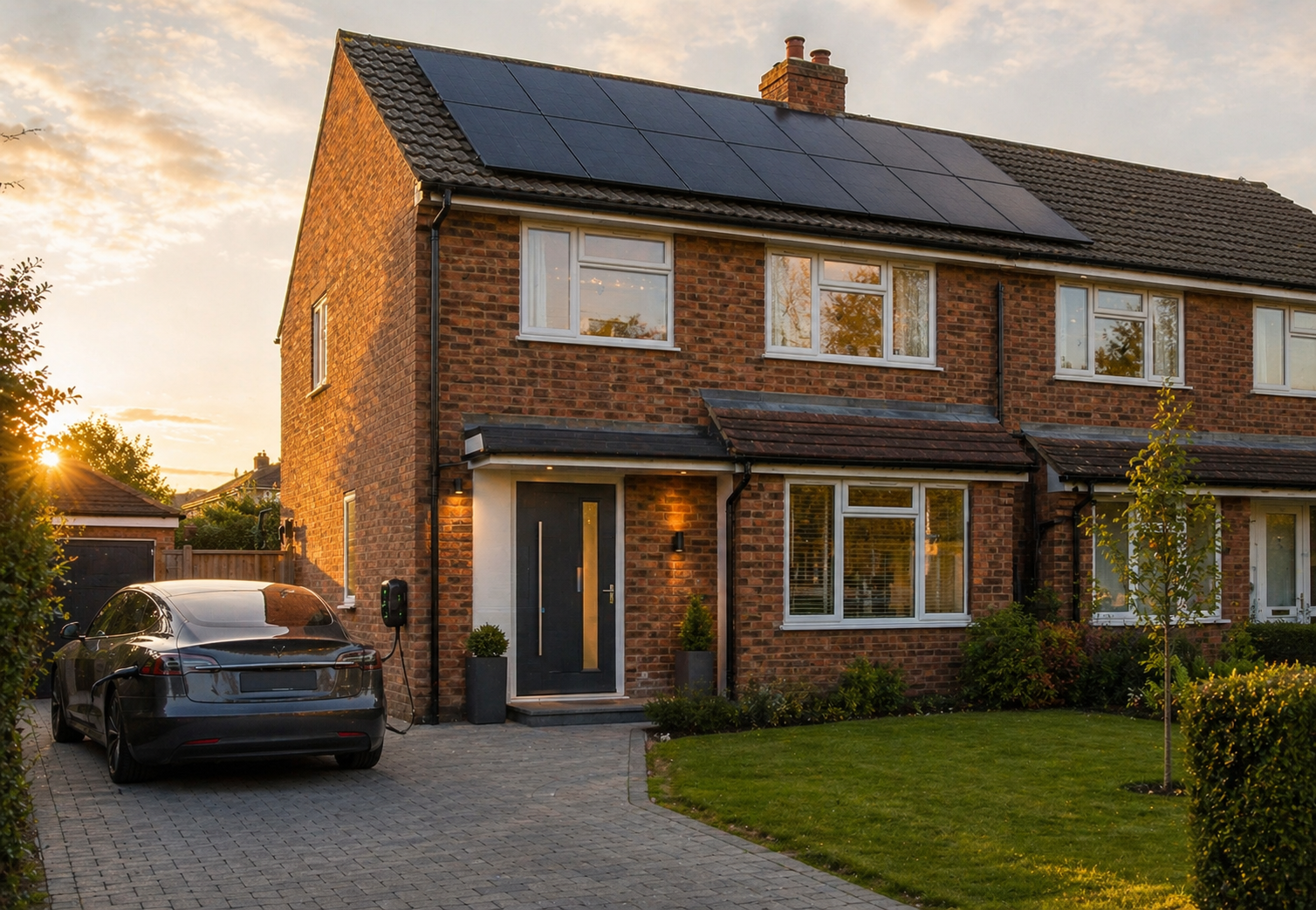
The realistic range for a 3-bed UK home in 2026 is £5,500 for a basic solar-only setup, up to around £12,000 for a premium system with a decent battery. Most homeowners land somewhere in the £7,500–£10,500 bracket. Here’s how that breaks down by system size:
Where Your Money Goes on a £10,000 Installation
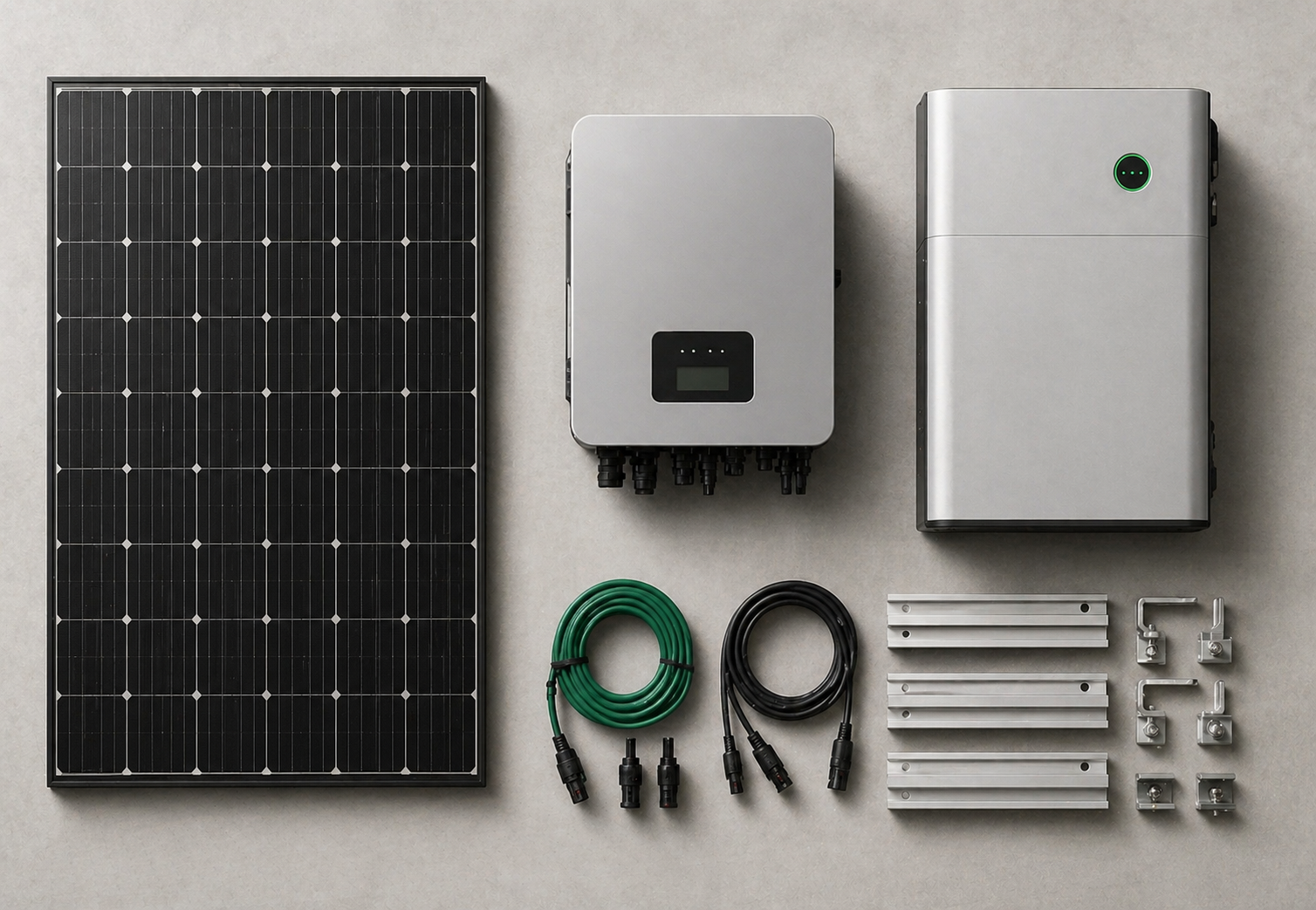
Most homeowners assume the panels are the bulk of the cost. They’re not. On a typical 4kW + 5kWh battery installation around £10,000, the breakdown looks roughly like this:
- Panels: £2,400–£3,000 (10 panels at 430–450W each, tier-1 brands)
- Hybrid inverter: £1,000–£1,400 (battery-ready)
- 5kWh battery: £2,500–£3,500
- Mounting & cabling: £500–£800
- Scaffolding: £500–£900 (often the most painful line item)
- Labour & DNO notification: £800–£1,200
- MCS registration & paperwork: £150–£300
Installer tip: any 4kW solar-only quote north of £8,500 deserves serious questions. Most reputable MCS installers in 2026 quote in the £1,500–£1,900 per kWp range for straightforward installations. Multiply by your system size and you’ve got a sensible ballpark to compare against.
🎯 Want to see exactly what you’re paying for — line by line? Get a clear, line-itemised quote from AORO Solar — panels, inverter, battery, scaffolding, labour and paperwork shown separately.
How Much Electricity Does a 4kW System Actually Generate?
A 4kW system in the UK typically produces somewhere between 3,200 and 4,000 kWh per year, depending on three things: where you live, which way your roof faces, and how much shade falls on it.
Output varies by region more than people realise. The south coast generates roughly 20–25% more than the north of Scotland for the same system. But every region in the UK is solar-viable — it’s not Spain, but it’s also not a waste of money in Glasgow.
Compare that to the average 3-bed UK home using around 2,700–3,400 kWh/year. In other words, a 4kW system can generate more than your home consumes over the course of a year. The catch — and it’s a big one — is timing.
How Much Will a 3-Bed Home Actually Save?
This is where most online calculators go wrong. They assume you use every kWh your panels produce. In reality, UK homes typically self-consume 35–50% of solar generation without a battery — the rest gets exported to the grid at a lower SEG rate (usually 7.9–15p/kWh, against the 27.69p you currently pay to import).
A battery flips that ratio. With 5kWh of storage, self-consumption rises to roughly 65–80%. That’s where the real bill reduction kicks in.
These payback figures assume electricity prices stay roughly where they are now. If prices rise — and most independent forecasts suggest they’re more likely to rise than fall over the next decade — payback shortens accordingly. If they fall significantly, payback lengthens. The numbers are estimates, not guarantees.
A Realistic 3-Bed Example: The Numbers in Detail
Let’s work through a realistic scenario. A family of four in the South East, 3-bed semi, both parents work hybrid (so two days at home), one EV charging overnight on a cheap-rate tariff.
- Annual electricity use: 3,400 kWh
- Current bill (electricity only): £942 + £200 standing charge = approx. £1,142
- Roof: South-east, 35° pitch, no shading
- System: 4kW (10 × 410W panels) + 5kWh battery
- Total cost: £10,200 (with 0% VAT)
Year 1 Numbers
Indicative payback: roughly 12–13 years at current prices. 25-year picture: a meaningful net gain after one inverter swap around year 12 — though the exact figure depends entirely on future electricity prices.
Are Solar Panels Worth It UK? The Honest 3-Bed Verdict
For most 3-bed homeowners with the right roof, yes. But “most” isn’t “all”. Run through these five questions before you commit £8,000+:
- Does your roof face south, south-east, or south-west? If yes — strong candidate. East or west — still works, output drops 10–15%. North-facing — almost certainly not worth it.
- Is your roof shaded for more than 30% of the day? Trees, chimneys, neighbouring roofs — heavy shading hurts returns even with optimisers.
- Are you spending over £80/month on electricity? Higher bills generally mean faster payback. Below £50/month and the maths starts looking marginal.
- Are you staying 8+ years? Solar can add value to your property, but the bulk of the financial return comes from the bill savings over time.
- Do you (or will you) own an EV or heat pump? Both significantly improve solar economics by lifting daytime consumption.
Score 4 or 5 out of 5 — solar is very likely worth it. Score 2 or fewer — you’ll probably get a better return from insulation, draught-proofing, or a smarter tariff first.
A good installer will tell you when it’s not worth it.
If your roof, usage, or timeline don’t add up, the right answer is “don’t do it” — not “let’s find a way to make it fit”. Walking away from a sale is part of the job.
5 Installer Tips Most Quotes Won’t Mention
1. Don’t oversize for the sake of it
A 6kW system on a home using 2,700 kWh/year sounds impressive but exports 50%+ at low SEG rates. You’d often save more with 4kW + battery. Match the system to your usage pattern, not your roof’s maximum capacity.
2. Switch SEG suppliers — you don’t have to stay loyal
Octopus pays 12p/kWh on Outgoing. Some major suppliers offer just 4p. The difference on a 4kW system is around £100–£150 a year. You can keep your import supplier and switch only your export — most homeowners don’t realise this is allowed.
3. Move heavy appliances to daylight hours
Run your dishwasher, washing machine, and tumble dryer between 10am and 4pm. Each kWh used directly saves 27.69p instead of earning 12p exported. Small habit, but it adds £150–£250/year to a typical 3-bed’s savings.
4. Ask about the inverter — and budget for replacement
Panels last 25+ years. Inverters typically last 10–15. Budget £900–£1,400 for replacement around year 12. If your installer hasn’t mentioned this, they’re either inexperienced or hoping you won’t notice.
5. Insist on MCS — it’s not optional
MCS certification is required to access Smart Export Guarantee (SEG) payments. Systems must be installed under MCS-certified standards to qualify. Any setup outside this framework can prevent you from receiving export income and reduce long-term returns.
Three Mistakes 3-Bed Homeowners Repeatedly Make
Accepting the first quote
The same 4kW spec can vary by £1,500–£2,500 between MCS installers. Get three quotes minimum. Compare £/kWp — over £2,200/kWp suggests overpricing; under £1,400/kWp often means tier-2 panels or corner-cutting. The sweet spot for quality is roughly £1,500–£1,900/kWp.
Skipping shading analysis
A single shaded panel can drag a whole string’s output down by a significant margin. Proper installers use PV*SOL or HelioScope with hour-by-hour modelling. If yours is “eyeballing it from the van” — walk away.
Adding a battery without thinking
Batteries make sense for evening-heavy households or homes already on a time-of-use tariff. They make less sense if you’re at home all day, self-consuming most of your generation already. Standalone battery payback is typically 10–15 years — so the “always add a battery” advice isn’t always right.
Get Your 3-Bed Solar Quote — Free, 15 Minutes
Generic UK averages don’t tell you what your roof will save your household. We’ll calculate it based on your actual postcode, usage, and roof.
In a free assessment with AORO, you get:
- ✅ Estimated bill reduction for your specific consumption
- ✅ Indicative payback period based on your roof’s solar yield
- ✅ Full shading analysis with PV*SOL software
- ✅ Line-itemised quote — no mystery bundles
- ✅ Honest verdict — including “don’t do it” if that’s the right answer
- ✅ Financing options with exact monthly figures
Typical response time: under 2 hours during working hours. Limited assessment slots each week. No sales pressure.
We don’t sell solar to everyone. Only where the numbers work.
Frequently Asked Questions
How much do solar panels for 3 bed house UK cost in 2026
A 3-bed UK home typically pays £5,500–£7,500 for a 4kW solar-only system, or £9,500–£11,000 with a 5kWh battery. Prices include the 0% VAT relief which runs until 31 March 2027.
How many solar panels does a 3-bed house need?
Most 3-bed UK homes need 10–12 panels (around 4kW total). This matches typical annual electricity use of 2,700–3,400 kWh and fits a standard south-facing pitched roof.
How much can a 3-bed home save with solar in 2026?
A 4kW system typically saves £550–£750/year on its own. Adding a 5kWh battery raises savings to £800–£1,100/year by lifting self-consumption from around 45% to 70%.
Are solar panels worth it in the UK in 2026?
For most homes with a south, south-east or south-west facing roof, minimal shading, and an electricity bill over £80/month — yes. Less so for north-facing roofs, heavily shaded properties, or homeowners moving within 5 years.
How long does solar take to pay back on a 3-bed home?
Solar-only systems typically pay back in 9–12 years at 2026 electricity prices. With a battery, payback is usually 11–14 years. EV owners and heat pump households often see faster returns.
Will solar panels work in UK weather?
Yes. Modern panels generate from daylight, not direct heat. They still produce 10–25% of peak output on overcast days. Even Scottish installations comfortably exceed UK average household consumption with a 4kW system over the year.
Do I need a battery with my solar panels?
Not always. Without one, UK homes typically self-consume 35–50% of their generation. A battery raises this to 65–80%. It’s worth it for evening-heavy or family households, less so for daytime-at-home retirees already self-consuming most of what they make.
What is the Smart Export Guarantee (SEG)?
The SEG requires major UK energy suppliers to pay you for surplus solar electricity exported to the grid. Rates currently range from around 4p to 15p per kWh. You can use different suppliers for import and export.
Do solar panels need planning permission in the UK?
No, for almost all residential installations. Solar falls under permitted development. Exceptions include listed buildings, conservation areas, and panels protruding more than 200mm from the roof slope.
How long do solar panels last on a UK home?
Solar panels carry 25-year performance warranties with degradation of 0.5–0.8% per year. Most physically last 30+ years. Inverters generally need replacing every 10–15 years at £900–£1,400.
The Bottom Line for UK 3-Bed Homeowners
Solar installation UK price for a 3-bed home in 2026 sits firmly between £5,500 and £11,000 depending on whether you add a battery. Annual savings typically range from £550 to £1,100. Indicative payback lands in 9–14 years, with the system continuing to generate for at least another decade beyond that.
The 0% VAT window closes on 31 March 2027 — after that, the same job costs around 5% more. If you’re seriously thinking about it, that’s a real deadline rather than a sales tactic.
But solar isn’t right for everyone. North-facing roofs, heavily shaded properties, and households planning to move within 5 years often see better returns from insulation or a smarter tariff. The honest answer depends on your specific home — not a UK average.
⚡ Not sure if your 3-bed home actually qualifies for solar? Get a free solar quote from AORO Solar — designed to meet MCS-certified installation standards, engineering-led, and with no commission-driven sales tactics. Typical response time: under 2 hours during working hours.


Comments are closed