
Reduce your dependence on the grid, protect yourself from rising electricity prices, and turn every unit of energy into a long-term saving.
No obligation. Fixed pricing. Speak directly with an engineer.
Most battery systems are sold on capacity. Ours are engineered for return.
Battery storage is not just for homes with solar.
You can install a battery system on its own and start reducing your electricity bills immediately using off-peak tariffs.
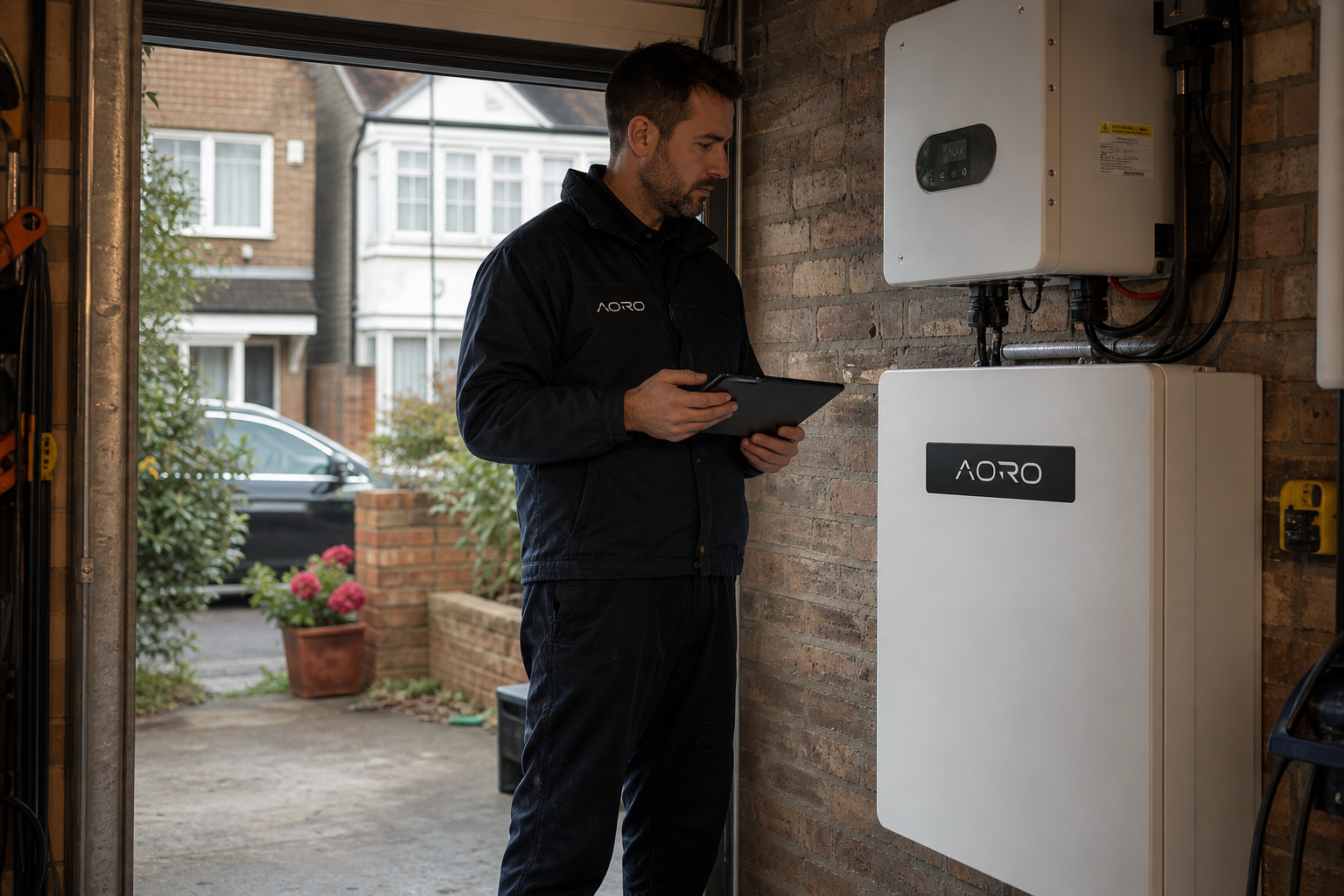
A home battery storage system stores electricity so you can use it later, instead of buying it from the grid at peak prices.
It charges during the day from your solar panels, or overnight on cheaper off-peak tariffs, and releases that stored energy when you need it most. In practice, this means powering your home through the evening, through expensive peak hours, and through periods when your solar system isn’t generating.
The principle is simple. Every kWh you store is a kWh you don’t buy from the grid tomorrow at a higher price.
Capture solar surplus or cheap overnight grid electricity at rates as low as 7p per kWh.
Energy is held in LFP batteries until you need it — not exported cheap and bought back at peak rates.
Power your home during peak hours at 30p+ per kWh using stored energy you captured for less.
The UK electricity market has changed. Battery storage is no longer optional for households serious about long-term energy costs. Here’s why.
Wholesale volatility, network costs, and tariff reforms have pushed UK prices to levels that aren’t returning to the pre-2021 baseline.
Under SEG you typically export surplus solar at 4p to 15p per kWh, while buying back at 25p to 35p per kWh. That gap is where your money goes.
Time-of-use tariffs charge significantly more between 4pm and 7pm, exactly when most UK households consume the most electricity.
Tariffs like Octopus Go offer off-peak rates as low as 7p per kWh overnight. A battery lets you capture that price and use it across the day.

The financial logic is straightforward.
You store electricity at the cheapest possible cost, whether that’s surplus solar generation at effectively zero cost, or off-peak grid electricity at 7p per kWh.
You use that stored electricity during peak hours, when grid electricity costs 30p per kWh or more.
The difference between those two prices, multiplied by every kWh you shift, is your saving. Across a year, on a typical UK home, this translates into hundreds of pounds of avoided electricity cost before you factor in solar self-consumption gains.
A correctly sized battery system typically increases self-consumption of solar from around 0 to 0% up to 0 to 0%. That is the difference between exporting your energy at 0 and using it yourself at 0.
Over the operational life of the battery, the cumulative financial impact is significant. A properly engineered system pays itself back and then delivers years of continued return.
Battery storage is valuable in both configurations. The financial logic is different in each case.
Without a battery, surplus solar is exported at low SEG rates. With a battery, that same energy is stored and used later, replacing electricity you would buy at full retail price.
The result is higher self-consumption, stronger ROI on your solar investment, and protection against future tariff increases. For households considering solar, adding a battery is rarely the wrong decision.
The system charges overnight on off-peak tariffs, capturing electricity at rates as low as 7p per kWh, then powers your home during expensive peak periods.
For households without suitable roof space, or not yet ready for solar, battery-only systems are practical. Many AORO clients start with battery storage and add solar later.
It depends on your consumption pattern, tariff, and the quality of the system you install.
The upfront investment is real. So is the return. Systems installed in 2025 typically pay back within 7–12 years, with operational lifespans of 10–15 years or more. LFP batteries routinely outlast their warranty periods.
Battery storage becomes more valuable over time, not less. Every electricity price increase improves your return. Every new time-of-use tariff strengthens the case. You are buying a hedge against future energy costs at today’s prices.
Permanent infrastructure: protection against grid volatility, full solar self-consumption, backup potential (with the right configuration), and alignment with where the UK energy market is already moving.
Realistic UK ranges for 2025. Every system is priced on your consumption, tariff structure, and long-term objective — not a generic package.
Fixed, fully itemised quotes. No variations after signing. Start smaller and expand later as needs grow.
| System type | Approximate cost |
|---|---|
| 5 kWhBattery system | £0 – £0 |
| 10 kWhBattery system | £0 – £0 |
| 15 kWh+Battery system | £0 – £0+ |
| CommercialBattery systems | Priced on survey |
Battery storage is not a commodity product. The hardware matters. The design matters more.
Battery capacity, inverter choice, and configuration specified by qualified engineers based on your consumption, tariff, and objectives.
Fixed, fully itemised quotes. No ambiguity, no variations, no hidden items.
Lithium iron phosphate as standard: longer lifespan, superior safety, and higher cycle counts than older chemistries.
MCS-certified, fully insured, compliant with UK electrical and building regulations. Complete documentation on handover.
Remote performance monitoring, proactive fault detection, and direct access to the engineers who designed your system.
On-site technical assessment of your electrical infrastructure, consumption profile, tariff structure, and solar system (if present). This is where the engineering starts.
Typically 1 to 2 hours on-siteAccurate capacity modelling, component specification, and a fully itemised fixed-price proposal. You'll know exactly what the system will do and what it will cost before committing.
Proposal within 5 working daysCarried out by our in-house team to MCS standards, with full electrical certification and building regulations compliance.
MCS certified in-houseRemote performance monitoring commissioned from day one. Full visibility of battery performance, charge cycles, and financial return.
Live from commissioning dayLong-term aftercare, warranty management, and tariff optimisation. As the UK energy market evolves, so does your system.
15+ year battery lifetime supportStraight answers on home battery storage in the UK.
Yes, for most households with moderate to high electricity consumption or an existing solar system. A correctly sized battery with the right tariff typically pays back within 7 to 12 years, against an operational lifespan of 10 to 15 years or more.
Modern LFP batteries typically carry 10-year warranties and routinely operate beyond that. Expected cycle life is 6,000 to 10,000 charge cycles. AORO installs LFP as standard.
In most cases, yes. Battery storage can be retrofitted using AC-coupled configurations, subject to inverter compatibility. AORO carries out a compatibility assessment before recommending any solution.
With the right configuration, yes. Standard installations do not provide backup by default. An islanding-capable inverter can power critical circuits during outages — a design decision at specification stage.
This depends on daily consumption, whether you have solar, and your tariff. Most UK homes are well served by 5 to 10 kWh. High-consumption households or large solar systems benefit from 10 to 15 kWh or more. AORO sizes every system to the household.
Yes. With a time-of-use tariff such as Octopus Go or Intelligent Octopus, your battery can charge overnight at off-peak rates and discharge during peak hours. This is how battery-only systems deliver financial return.
No. Home battery storage installations do not require planning permission in the UK. Installation must comply with electrical and building regulations, which AORO handles as part of every project.
Typically in a garage, utility room, loft, or outdoor location. AORO batteries are rated for indoor and outdoor installation. Final placement is agreed at survey based on infrastructure, accessibility, and thermal considerations.
Yes, when specified and installed correctly. LFP chemistry is significantly safer than older lithium-ion formats, with far higher thermal stability. All AORO installations comply with UK safety standards.
Very little. Modern systems are sealed units with no user-serviceable parts. AORO provides remote monitoring, proactive fault detection, and firmware management throughout operational life.
In most cases, yes. Modular systems allow additional capacity as consumption grows or solar expands. AORO specifies systems with future expansion in mind wherever relevant.
Performance degrades slowly, typically retaining 70 to 80% of original capacity at the end of a 10-year warranty. The system continues to function beyond warranty at reduced capacity. Many AORO batteries operate well past year 15.
Generally no, provided the installation is certified and compliant. AORO provides all documentation required by insurers. It is worth notifying your insurer as good practice.
Manufacturer warranties on the battery (typically 10 years), inverter warranties (5 to 12 years depending on manufacturer), and AORO's own workmanship warranty. Full documentation is provided at handover.
Most quotes hide the real cost. Ours don’t.
Before you commit to any installer, get a clear, engineered assessment of what a battery system will do for your household and what it’s worth financially.
We’ll show you exactly:
No guesswork. No hidden costs. No pressure.
No obligation. Fixed pricing. Speak directly with an engineer.

Secure your energy independence. Reduce grid reliance by up to 70%.